|
December 7, 2000 Press
Release
MELBOURNE,
Australia—Beginning Dec. 1, the “land down under” has been
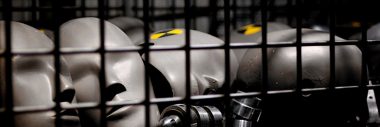
playing host to the debut of the latest in crash test dummy
technology.
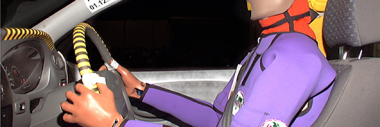
The WorldSID (World
Side Impact Dummy) Task Group, a team of automotive safety experts
from around the world, are putting a new side impact dummy through a
series of crash tests at the WorldSID-Prototype Demonstration Workshop
in Melbourne, Australia. The Australian Department of Transport and
Regional Services is hosting the Workshop at the Ford Motor Company
Training and Development Center.
The testing is being conducted at Autoliv Australia's facility. According to the WorldSID North American region chair, Risa
Scherer, this dummy is intended to become the universal standard for
side impact vehicle crash tests.
“We’ve recognized
that there are two issues the entire world is dealing with. First of
all, people are basically the same worldwide and secondly, these crash
test procedures are supposed to simulate identical events,” she
said.
European region
chair, Dominique Cesari, of INRETS-France stressed the importance of
side impact crash research.
“Car safety is a
key issue worldwide, and side impact accidents, even if they are less
frequent than frontal ones, are more severe and providing protection
is more difficult due to the limited space to control occupant motion
in side impacts,” he said.
Scherer, who works
for Ford Motor Company, also said that the WorldSID dummy is intended
to replace the three different dummies being used around the world for
side impact tests. The
biofidelity (a measure of how well it's behavior resembles that of a
living human) of the dummy will be an improvement over all existing
dummies.
“This dummy is more
humanlike. Our goal is that every component will be awarded a 'good'
to 'excellent' biofidelity rating, on the scale developed by ISO
(International Organization for Standardization)” Scherer said.
The other dummies
being used as standard in today’s crash tests are considered
'marginal', at best, by this ISO rating.
Cesari agreed that
the dummy’s biofidelity is key. “The assessment of the protection
and the efficiency of possible technical solutions greatly depend on
the biofidelity of the dummy used in crash tests and its ability to
measure relevant injury criteria,” he said.
Asia/Pacific region
chair, Takahiko Uchimura of Nissan, explained that the "WorldSID
is designed to be utilized not only as a device for regulatory vehicle
certification tests, but also for research testing.
We believe that the introduction of the WorldSID will provide
new research and development opportunities to enhance passive safety
performance of motor vehicles."
Testing began with a
crash test of a Ford Falcon on Dec. 1. It will be followed by sled
testing on Dec. 5 and compatibility testing—LandRover Freelander
Sport Utility Vehicle into a Ford Falcon—Dec. 8.
Following this debut
of the WorldSID, the prototype dummy will then be tested and evaluated
by Transport Canada, the United States National Highway Traffic Safety
Administration (NHTSA), and the European Commission. These tests will
include biofidelity evaluations to determine how well the WorldSID
simulates human responses in a crash test.
The data will then be evaluated together by worldwide auto
manufacturers, researchers, and governments.
Scherer said the
project is on target and she anticipates having production dummies
available the first quarter of 2004.
It is intended that the WorldSID will be used in a new
regulatory side impact test procedure being developed under the
auspices of the International Harmonised Research Activities (IHRA),
which is made up of representatives from governments worldwide.
Kazuhito Asakawa,
secretariat of the Asia/Pacific region states, "The WorldSID
project is an excellent example of how worldwide harmonization can be
achieved. And can be applied toward other regulations."
The WorldSID project
is unique because it is developing a single, harmonized global device
- literally from a blank sheet of paper – rather than attempting to
harmonize existing but differing test devices from the participating
regions of the world.
WorldSID Program
Manager, Marc Beusenberg of Canada, said the international cooperation
involved in this project has been challenging, yet an incredible
success.
“In my view, a very
exciting part of this development is the fact that this worldwide
undertaking did not result in significant technical compromises. At
the Melbourne workshop, we are demonstrating that significant progress
has been made; enough to convince the world that a new, advanced and
harmonized side impact crash test dummy is real,” he said.
Project sponsors
include the Japan Automobile Manufacturers Association (JAMA), the
Association des Constructeurs Europeans d'Automobiles (ACEA - the
European automobile manufacturers association), the European
Commission, Alliance of Automobile Manufacturers (AAM), and the
Occupant Safety Research Partnership (OSRP) of the United States
Council for Automotive Research (USCAR).
A team of
international contractors created the WorldSID dummy—each of the
dummy’s 10 body components was constructed separately.
The dummy’s head, neck and pelvis were designed and created
by a consortium of European companies from the Netherlands, France and
the United Kingdom. Similarly, several contractors from the United
States designed the thorax, lumbar spine, shoulder, arms, legs,
instrumentation and dedicated data acquisition system.

Download high res jpeg
photograph: 656kb

Download high res
jpeg photograph 656kb

Download high res
jpeg photograph 656kb
|